
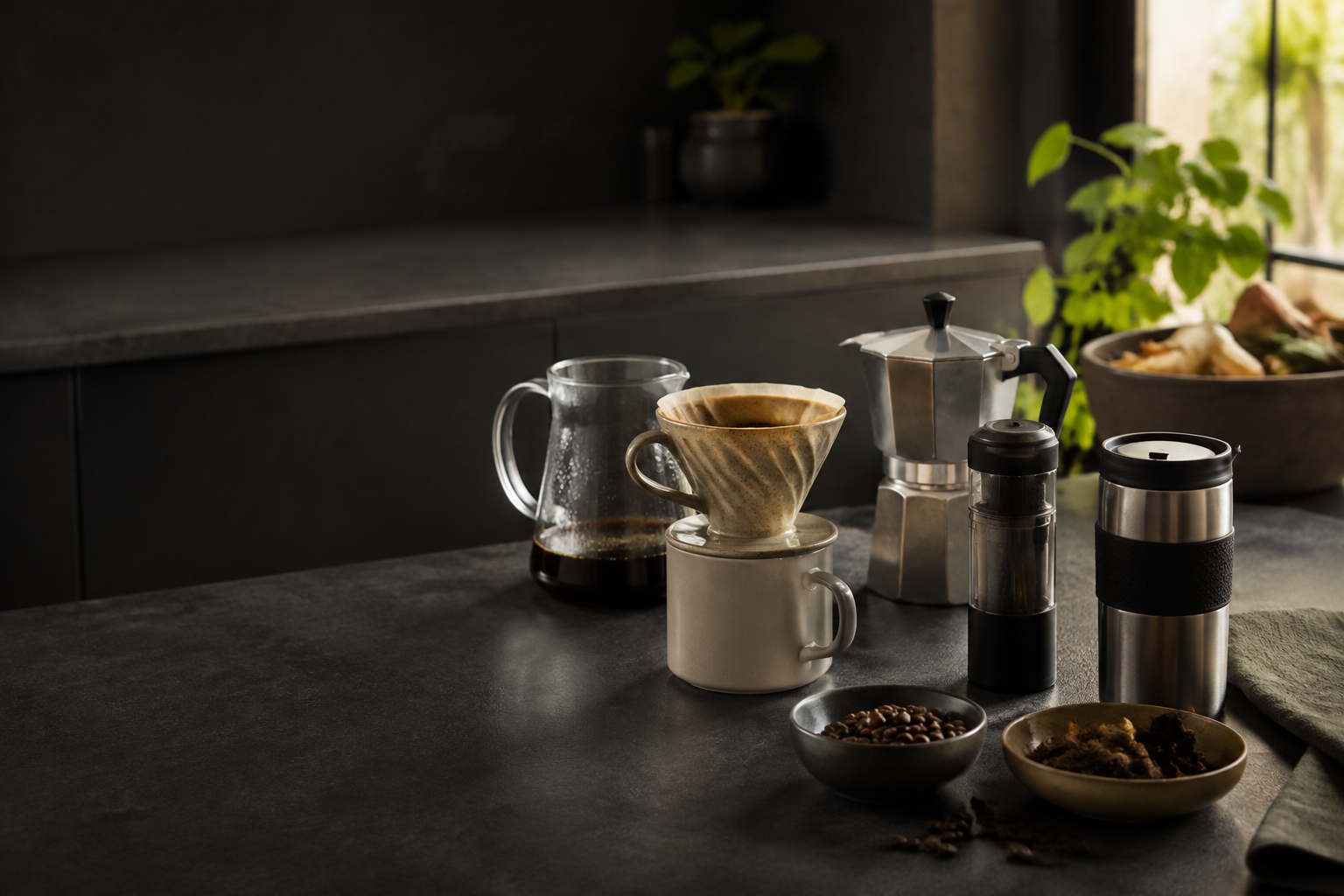
Can making coffee at home actually save money?
Start with one brewer you will use, count the real cost of each cup, and give the difference a more important job.
Buying coffee away from home can feel like a small expense until it repeats several mornings a week. Homemade coffee usually costs less, but the equipment only creates savings when it replaces something that would otherwise be purchased.
The least expensive setup is the one that gets used.
A manual brewer, a way to heat water, coffee, and a reusable cup are enough. Choose one method that fits the amount and style of coffee normally consumed before buying several devices.
A useful review includes the cost and the friction.
The cheapest brewer is not necessarily the best value if it is inconvenient to clean, makes the wrong amount, or requires supplies that are difficult to keep on hand. These recommendations are considered as complete routines rather than isolated products.
Recurring cost
Paper filters and cold-brew bags add a small cost to every batch. A reusable metal filter avoids that expense but changes the texture of the coffee.
Right-sized brewing
An AeroPress suits one cup. The larger Bodum carafe suits several. A six-cup moka pot uses small espresso-style measures—not six full mugs.
Cleanup and durability
Simple brewers have little to break, but ceramic and glass need careful handling. Gaskets and paper filters eventually need replacement.
A routine that sticks
Cold brew can be prepared ahead. Pour over asks for a few attentive minutes. The method should fit the morning rather than create a new chore.
Simple equipment, with the tradeoffs included.
Most of these products are manually operated and do not need an outlet. The electric kettle and optional grinder are the exceptions. None is presented as a universal “best” choice: each solves a different brewing problem, and most households need only one primary brewer.
Typical U.S. price ranges as of September 2026. Retail prices, pack sizes, promotions, and availability can change, so check the retailer listing before purchasing.
20-ounce stainless-steel tumblers
Why it made the list
A six-pack keeps the per-cup price modest. The insulated steel works for hot or cold drinks, does not sweat in normal use, and is less fragile than glass.
- Best for
- Households that want several reusable cups
- Keep in mind
- Only economical when several cups will be used.
Creano porcelain coffee dripper
Why it made the list
A compact ceramic brewer with no electrical parts. It is straightforward to clean and uses widely available number 4 cone filters.
- Best for
- A simple, paper-filtered cup
- Keep in mind
- Needs filters and separately heated water.
Melitta number 4 unbleached filters
Why it made the list
The three-pack provides up to 300 single-use filters, keeping the filter cost for each batch small.
- Best for
- Cone brewers using size 4 filters
- Keep in mind
- A small but recurring expense.
Disposable cold-brew filter bags
Why it made the list
Coffee, water, a filter bag, and a container are all that is needed. One refrigerated batch can cover several mornings.
- Best for
- Preparing several cold servings ahead
- Keep in mind
- Keep the finished coffee refrigerated.
0.8-liter electric gooseneck kettle
Why it made the list
The spout makes a controlled pour easier and the kettle can also heat water for an AeroPress, tea, or other kitchen uses.
- Best for
- Pour-over control and quick hot water
- Keep in mind
- One of two plugged-in products here.
AeroPress Original
Why it made the list
A compact manual brewer for a regular cup or a smaller concentrated drink. It is easy to store and travel with.
- Best for
- One cup and recipe flexibility
- Keep in mind
- Needs hot water and filters.
AeroPress paper micro-filters
Why it made the list
A 350-count package lasts through many brews. Paper filters help keep fine particles out of the cup.
- Best for
- A clean cup with an AeroPress
- Keep in mind
- Confirm compatibility with the brewer model.
Bodum 34-ounce pour-over maker
Why it made the list
The reusable steel filter removes the required paper-filter expense. Paper can still be added for a cleaner cup.
- Best for
- Several cups with a reusable filter
- Keep in mind
- The glass carafe needs careful handling.
Bialetti six-cup Moka Express
Why it made the list
A durable manual brewer that produces a smaller, stronger serving than a typical drip-coffee mug.
- Best for
- Strong, concentrated coffee
- Keep in mind
- It must cool before a second batch.
OXO compact conical burr grinder
Why it made the list
The 50-gram burr grinder adds freshness and grind-size control without taking over the counter.
- Best for
- Moving from ground coffee to whole beans
- Keep in mind
- Not required to begin saving money.
Ground coffee avoids another upfront purchase.
Pre-ground coffee means no grinder and less cleanup. These selections offer decent everyday flavor for the price without leaning as heavily into the burnt character common to some darker blends. Taste remains personal.
Lavazza Espresso Ground Coffee
A practical larger-bag option with an approachable profile and less pronounced burnt character than some dark espresso blends.
View on Amazon ↗Peet’s Big Bang Ground Coffee
A convenient everyday medium roast for someone seeking a balanced alternative to a heavily roasted cup.
View on Amazon ↗illy Intenso Ground Espresso Coffee
A more intense option with deep cocoa notes. The smaller can may cost more per ounce, so flavor preference matters.
View on Amazon ↗Home-brewed coffee saves money when it replaces a coffee-shop purchase.
Compare buying coffee at a shop with brewing it at home.
Equipment is counted in year one only; recurring supplies continue in later years.
Let the grounds do a second job.
Used grounds and many uncoated paper filters can become a nitrogen-rich “green” compost ingredient. Mix them with a larger amount of dry “brown” material such as leaves or shredded uncoated cardboard.
Finished compost is safer than piling fresh grounds around plants.
Thick layers can compact, repel water, and interfere with growth.
Grounds do not dissolve and should not go into sinks or toilets.
Grounds are not a complete fertilizer or a guaranteed way to acidify soil. See the EPA’s composting guidance.
Give the savings a destination.
If home coffee frees up about $70 each month, schedule a $70 transfer to savings or add it to a debt payment. The redirect is what gives the change a measurable result.
See what an extra payment could change →