
Make your produce last longer.
Small storage habits can help you get more meals from the groceries you already paid for—and keep less money going into the trash.
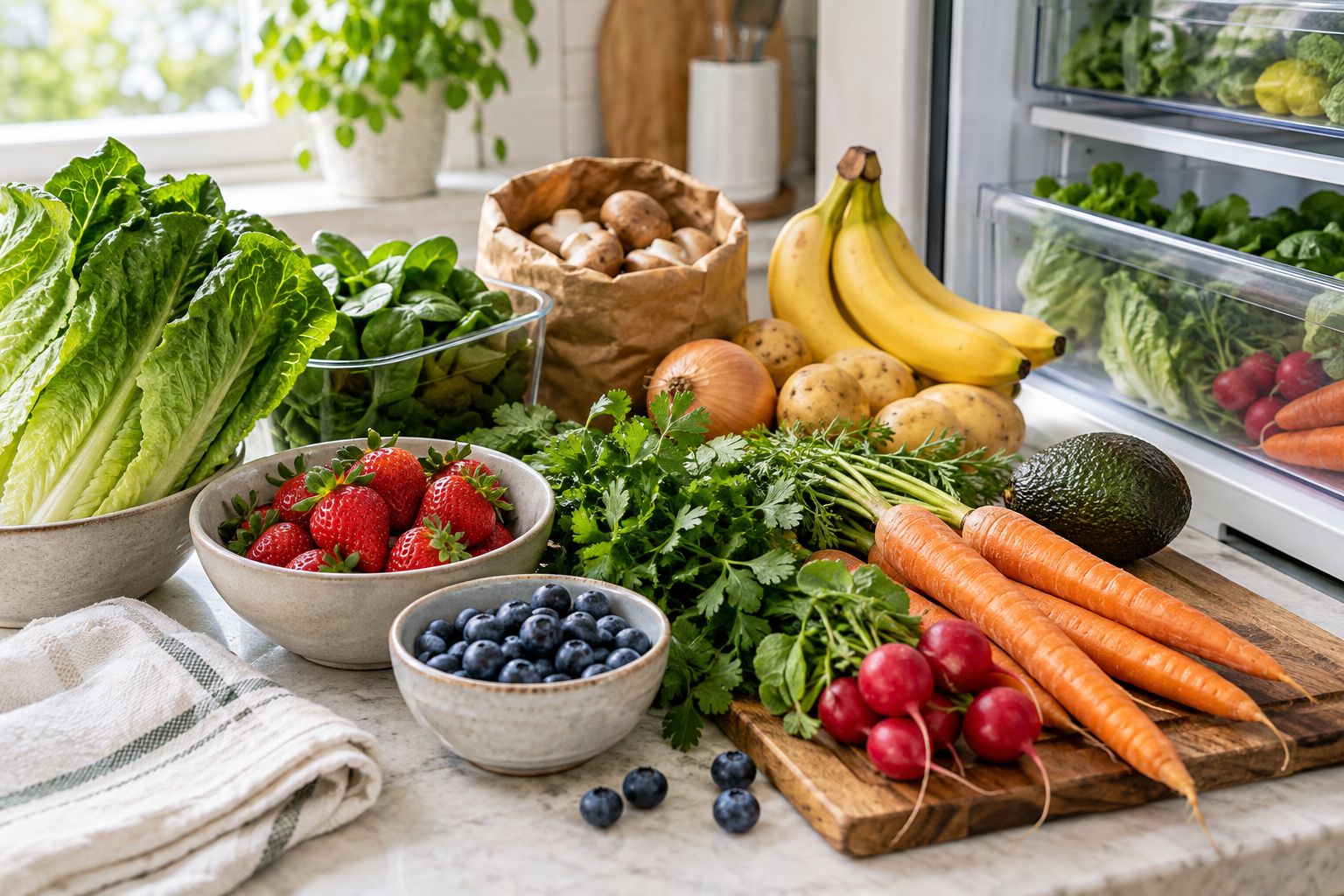
A bargain bag of spinach stops being a bargain when half of it ends up in the trash. The goal here is not to promise a precise number of extra days. Freshness depends on when you bought the produce, how it was handled, and how cold your refrigerator is.
Cold, clean, and not too wet.
Use these time ranges as buying estimates, counted from the day you bring produce home. Actual freshness depends on how ripe it was at purchase, refrigerator temperature, humidity, bruising, and how it was handled. When in doubt, buy the smaller amount and restock later.
Keep your refrigerator at 40°F or below. Refrigerate perishable produce promptly. Unless it is visibly dirty, wait to wash it until you are ready to prepare or eat it; if you do wash it early, dry it well first. Wash produce under running water—soap and commercial produce washes are not recommended.
Make an “eat first” area in the crisper. Put berries, tender greens, and ripe fruit where you will see them before the sturdier vegetables. Keep apples, pears, peaches, and other ripe fruit away from greens and broccoli when you can. These fruits release ethylene, a natural plant hormone that speeds ripening. Sensitive greens respond with faster yellowing, browning, and quality loss. Separating the two does not stop spoilage, but it reduces one avoidable source of stress in a crowded refrigerator.
FDA produce-handling guidance ↗ · University of Maryland storage chart ↗ · UC Davis lettuce science ↗
Greens and berries need moisture control.
Lettuce and loose greens
Try this: Add a clean paper towel to a container or bag of loose greens and replace it when damp. The towel absorbs condensation, which helps reduce sliminess while the container limits drying.
Asparagus
Try this: Trim a small amount from the ends, stand the spears upright in a jar with about an inch of water, and refrigerate. Loosely cover the tops if they begin to dry.
Berries
Try this: Remove damaged berries, keep the rest in a shallow layer, and refrigerate them unwashed. Freeze sound surplus before it softens; freezing changes texture but works well for smoothies, sauces, and baking.
Save the herbs and mushrooms you usually forget.
Cilantro and parsley
Try this: Trim the stems, stand the bunch in about an inch of water, cover loosely, and change the water daily. Basil is different: keep it in water at room temperature.
Mushrooms
Try this: Keep mushrooms in a paper bag or their original ventilated package. Airflow helps moisture escape; airtight plastic can trap condensation and speed sliminess.
Illinois Extension herb guidance ↗ · Mushroom storage guidance ↗
Buy different stages of ripeness.
Bananas
Try this: Let bananas ripen on the counter, then refrigerate ripe fruit or peel and freeze overripe bananas for smoothies and baking.
Avocados
Try this: Let firm avocados ripen on the counter, then refrigerate them. Buy different stages of ripeness so they do not all become ready on the same day.
Iowa State banana guide ↗ · Iowa State avocado guide ↗ · FDA cut-produce guidance ↗
Convenient, but usually costlier and quicker to spoil.
Pre-cut fruit can save preparation time, but you are paying for that convenience and giving the fruit a shorter life. Compare the unit price with whole fruit, then buy only what you can use within a few days.
Cut watermelon and melons
Try this: Refrigerate cut watermelon promptly in a covered container and plan to use it within about 3–4 days. Keep cut melon at 40°F or below.
Cut pineapple and other fruit
Refrigerate cut pineapple and other cut fruit in covered containers and use them within about 3–4 days. If the whole fruit is affordable and manageable, cutting it at home usually gives you more usable food for your money.
Give onions, potatoes, and roots the right place.
Keep whole onions in a cool, dry, ventilated spot away from potatoes. Store potatoes in darkness with airflow and away from heat. The reason to separate them is mainly that they need different humidity conditions: onions keep best in cold, dry air, while potatoes keep better in a somewhat more humid, slightly warmer space. Separate storage also limits moisture transfer and helps keep decay in one group from spreading to the other.
Carrots and radishes
Remove leafy tops before refrigerating the roots. The greens draw moisture from the root, which can make carrots and radishes soften sooner. Store the roots in the crisper and use the greens separately while they are still fresh.
If your home does not have a genuinely cool storage spot, buying a smaller quantity may save more than a bulk discount.
UMass onion guidance ↗ · Extension potato guidance ↗ · USU storage conditions ↗
Question dramatic storage claims.
A vinegar rinse may reduce some surface microbes, but it has not been shown to reliably add weeks of freshness. If you rinse berries, dry them thoroughly before refrigerating because lingering moisture can encourage mold.
Wrapping banana stems may slow browning for some fruit, but the effect is limited and inconsistent. Monitoring ripeness, refrigerating ripe fruit, and freezing surplus are more useful habits.
One container does not work for every type of produce. Greens need moisture control, mushrooms need airflow, and berries should stay dry until you use them.
Discard rotten produce. Appearance alone cannot establish food safety. Read the FDA’s safety guidance ↗
| Produce | Freshness estimate | Best starting method | Mistake to avoid |
|---|---|---|---|
| Whole lettuce | 5–14 days | Refrigerate in a loosely closed produce bag | Letting it dry out or become crushed |
| Loose greens | 3–7 days | Refrigerate loosely packed; use a clean towel for excess moisture | Packing wet leaves tightly |
| Berries | 3–7 days | Refrigerate unwashed; remove spoiled berries | Leaving berries wet or crushed |
| Cilantro and parsley | 7–14 days | Trim stems, stand in a little water, cover loosely, refrigerate | Letting leaves sit in stale water |
| Basil | 5–10 days | Keep stems in water at room temperature | Refrigerating it like other herbs |
| Mushrooms | 5–7 days | Refrigerate in a paper bag or porous container | Trapping moisture in airtight plastic |
| Bananas | 3–7 days | Ripen on the counter; refrigerate when ripe | Buying more ripe bananas than you can use |
| Avocados | 3–7 days once ripe | Ripen on the counter, then refrigerate | Waiting until every avocado is soft |
| Onions | 2–8 weeks | Cool, dry, ventilated storage | Storing them in damp plastic |
| Potatoes | 2–8 weeks | Dark, ventilated storage around 40–55°F | Refrigerating or storing them in damp plastic |
| Carrots and radishes | 2–4 weeks | Remove leafy tops; refrigerate in the crisper | Leaving tops attached |
| Apples | 3–6 weeks | Refrigerate for longer storage; keep away from leafy greens | Letting one spoiled apple sit with other produce |
| Tomatoes | 5–7 days once ripe | Keep unripe tomatoes at room temperature; refrigerate ripe ones if needed | Refrigerating tomatoes before they ripen |
| Watermelon and melons | 5–10 days whole | Keep whole at room temperature for flavor; refrigerate cut melon | Leaving cut melon at room temperature |
| Peaches and pears | 3–7 days once ripe | Ripen at room temperature, then refrigerate | Refrigerating before they are ready to ripen |
| Pineapple | 3–5 days once cut | Refrigerate once cut; use promptly | Leaving cut fruit uncovered |
| Broccoli | 5–7 days | Refrigerate in a loose or perforated bag | Sealing it wet in airtight plastic |
| Asparagus | 3–5 days | Trim ends and stand upright in a little water; refrigerate | Letting the cut ends dry out |
| Cucumber | 4–7 days | Refrigerate and use relatively soon | Letting it freeze or become soft |
| Bell peppers | 7–14 days | Refrigerate in the crisper | Leaving them warm for extended periods |
| Bean sprouts | 2–4 days | Refrigerate promptly and use quickly | Keeping them unrefrigerated |
| Summer squash | 4–7 days | Refrigerate and use within a few days | Storing it in a warm, dry pantry |
Put the avoided waste toward your next goal.
If better storage helps you avoid $5 of wasted groceries each week, that is $260 over a year. Track your actual number, then redirect the difference to a debt payment or savings transfer.
See what an extra payment could change →